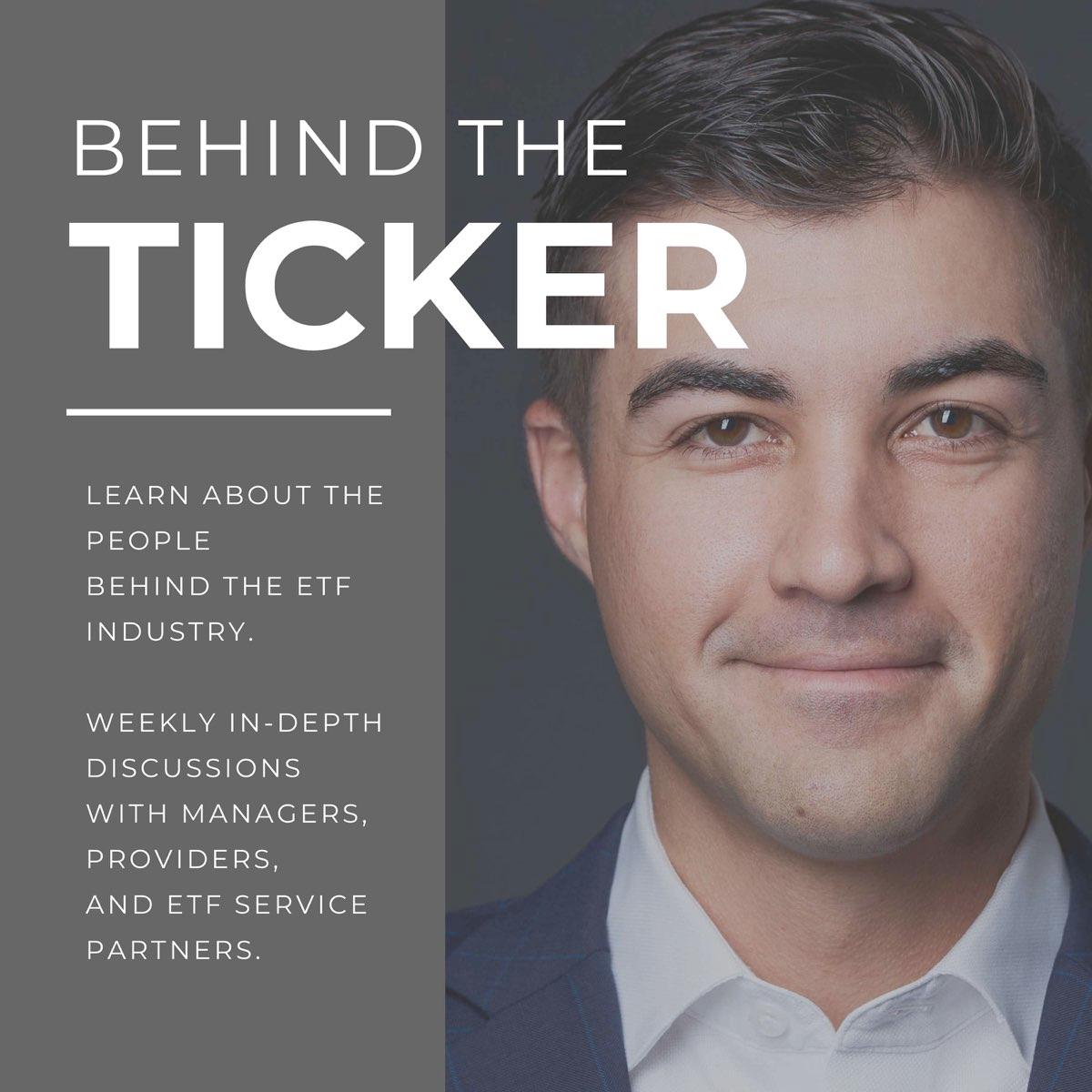
Kevin T. Carter, EMX ETFs
Why 80% of US Startups Are Now Running on Chinese AI Models
Kevin T. Carter is back on Behind the Ticker for his second appearance. He started his career at Robertson Stevens in 1992, has collaborated with Princeton economist Burt Malkiel for more than 25 years, built the first fractional-share brokerage (eInvesting, sold to E*Trade) and the first direct indexing platform (Active Index Advisors, sold to Natixis), and has spent the last 20 years building emerging markets ETFs including CQQQ (the first China tech ETF, launched with Guggenheim in 2010) and EMQQ (the emerging markets internet ETF, launched in 2014). This year he created a new brand, EMX ETFs, in partnership with Tidal Financial, and launched TGRZ — the China AI Tigers ETF — on August 26.
In this episode, Kevin uses Jensen Huang's five-layer AI stack framework to walk through where TGRZ sits and why it matters. The fund targets Chinese large language models — the fourth layer of the stack — and specifically the six companies known as the Tigers, all of which came out of the Tsinghua University computer science lab in Beijing. Kevin explains why open-weight Chinese models like Z.ai, MiniMax, Moonshot's Kimi K3, and DeepSeek have become the infrastructure of choice for an estimated 80% of US startups, including Airbnb and the Cursor business that SpaceX recently acquired — customizable, on-premises, controllable, and roughly 90% cheaper than the closed US alternatives. He walks through the DeepSeek origin story (a Chinese math prodigy running a quantitative hedge fund who built the model on the side), how the fund is exploring private pre-IPO exposure through relationships Kevin has built over 20 years in the region, and why he's genuinely honest that TGRZ is thematic and speculative rather than a core value holding.
The most substantive investment argument in the episode comes when Kevin steps back to talk about where he does see Buffett-style value: TSMC, Samsung, and SK Hynix — what he calls the Mag 3, now 33% of the MSCI Emerging Markets Index, responsible for 80% of the last 20 months of emerging markets returns, and expected to collectively earn $965 billion across 2026 and 2027. Kevin notes SK Hynix trades at a P/E of 3.5. The full Mag 3 trades at a collective multiple under five. He also gets into where the bottlenecks in the AI build-out really sit — memory shortages already killing small players, power constraints likely to define the next several years, and why China's three-times-larger power capacity is a competitive edge most US investors haven't priced.
Daily Market Intelligence
The Signal
Brad Roth's daily market brief — systematic signals, ETF positioning, and what the data is actually showing.
Subscribe Free →