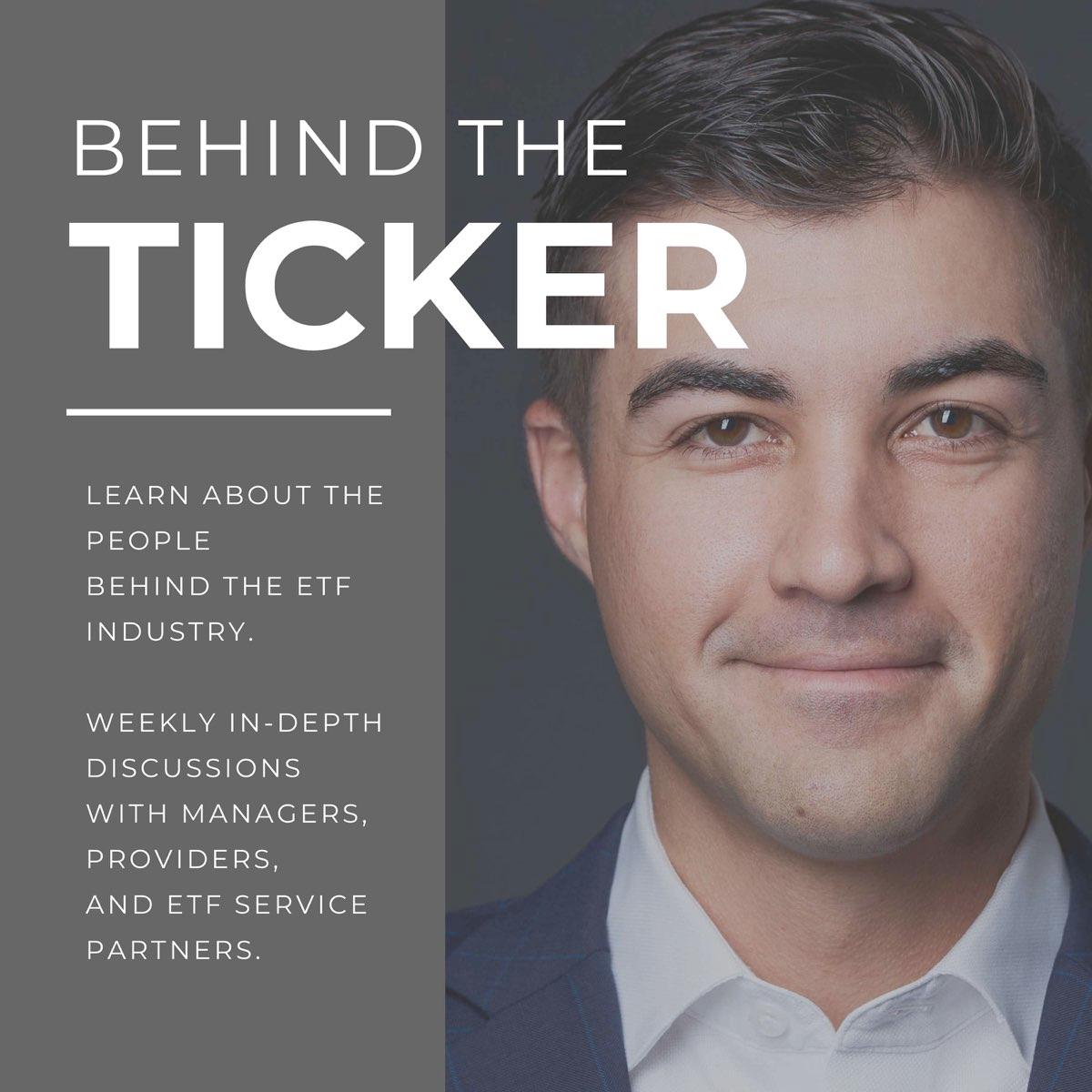
Doug Daly, Core Commodity
Why Producers Fell From 35% of the S&P to 5% — And What It Means for Portfolios
Doug Daly joined Core Commodity Management straight out of Johns Hopkins, where he studied physics and applied mathematics, and is now a managing director and portfolio manager at the firm. Core Commodity is dedicated entirely to commodities asset management, founded in 2003 by some of the most senior innovators in commodities futures — including the firm's CIO, who co-created what is now the Bloomberg Commodity Index. The firm's flagship natural resource equity strategy has been running since 2012, giving the ETF wrapper that launched in 2024 — CCNR, the ALPS Core Commodity Natural Resources ETF — a 12-plus year track record in its underlying approach.
In this episode, Doug walks through why CCNR is designed around upstream producers rather than large integrated energy companies, and why that distinction materially changes the fund's commodity price sensitivity relative to passive natural resources indices. He makes the structural case for commodities exposure with a specific data point most advisors haven't heard: in the late 1970s, companies producing energy, materials, and food represented roughly 35% of the S&P 500. Today that number is approximately 5%, with the bulk concentrated in just a couple of names. Most investors assume they have real exposure to companies that produce the physical goods the economy runs on simply because they own broad-based equities — and Doug walks through why they genuinely don't. He also lays out the supply-side case: a new copper mine takes 15 years from planning to production, producers have shifted to a mentality of capital restraint rather than growth capex, and demand from AI data centers, electrification, nearshoring, and military rearmament is accelerating against a backdrop where supply simply cannot respond at the same pace.
The episode gets into specific portfolio mechanics: why the fund holds roughly 300 names across energy, agriculture, base metals, and precious metals; the Freeport-McMoRan mudslide event last year that illustrates why diversifying across 12 copper miners rather than relying on one proxy matters; why CCNR includes uranium, lithium, specialty metals, renewable and alternative energy exposure, agricultural inputs and timber in ways that passive indices typically don't; and why the 40% US / 60% international split is both an accurate reflection of global commodity production and an enhancer of the fund's commodity-like characteristics through the inverse correlation between commodity prices and the dollar. Doug also walks through the systematic-fundamental investment process (roughly 25 factor drivers operating at sector, industry, and single-name levels), and lays out the strategic case for commodities exposure as the highest inflation-sensitivity option in a portfolio alongside the tactical case for the current moment given producer capex restraint and the AI-driven demand tailwinds.
Daily Market Intelligence
The Signal
Brad Roth's daily market brief — systematic signals, ETF positioning, and what the data is actually showing.
Subscribe Free →